Written by Patricia Sims
Why Elephants Matter
What many Canadians don’t realize is that, until one year ago on January 8, 2024, Canada had no legislation to protect elephants and rhinos. Why does this matter? Because the global trade in elephant ivory and rhino horn has devastated these magnificent species, pushing them closer to extinction. But on this day one year ago, Canada took a stand, banning the import and export of raw elephant ivory and rhino horn. This decisive move aligned Canada with the global movement to protect endangered species and conserve biodiversity.
For me, this anniversary is deeply personal. Canada’s legislation didn’t happen overnight. It took years of advocacy from the Ivory Free Canada Coalition, a dedicated alliance of NGOs initiated by Vancouver-based Elephanatics, Rhino and Elephant Defenders, and major organizations like the Jane Goodall Institute of Canada and Humane Society International/Canada. Nearly a million Canadians signed petitions, raising awareness for the cause. Our organization, World Elephant Day, which we launched 14 years ago as a global campaign to focus attention on elephant conservation, played its part in amplifying the message.
World Elephant Day, observed every August 12, brings together conservationists, scientists, governments, and media to spotlight why elephants matter. This past World Elephant Day, I found myself in Kenya, visiting some of the African elephant conservation organizations that have embraced this annual event and are working tirelessly to protect these iconic creatures.
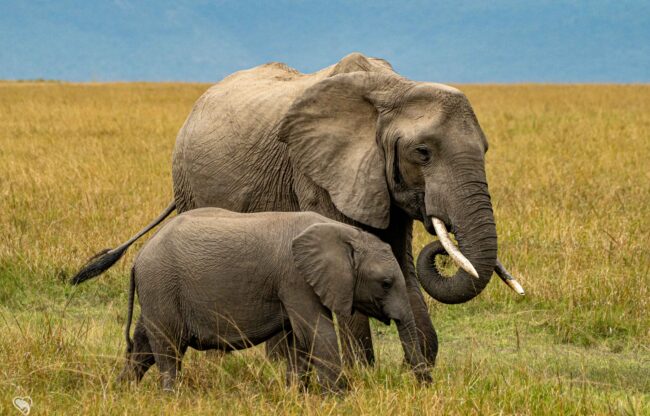
Photo: Patricia Sims
On the Road to the Mara
I’m bumping along one of the dustiest, roughest roads I’ve ever experienced, hanging out of a safari jeep window, eager to capture my first photo of a wild African elephant. Although I’ve spent years photographing and filming elephants as a wildlife filmmaker, this moment felt entirely new. Most of my work has focused on Asian elephants, following them through the forests of China and Thailand. That work led to me producing and directing two documentaries and eventually to the creation of World Elephant Day. Yet, despite collaborating with Kenyan conservation organizations for years, I had never met an African elephant in the wild—until now.
This trip to Kenya was special for so many reasons: my first time in the legendary Maasai Mara, my first visit to conservation organizations I’d long admired, and my first encounter with Africa’s elephants in their natural habitat.
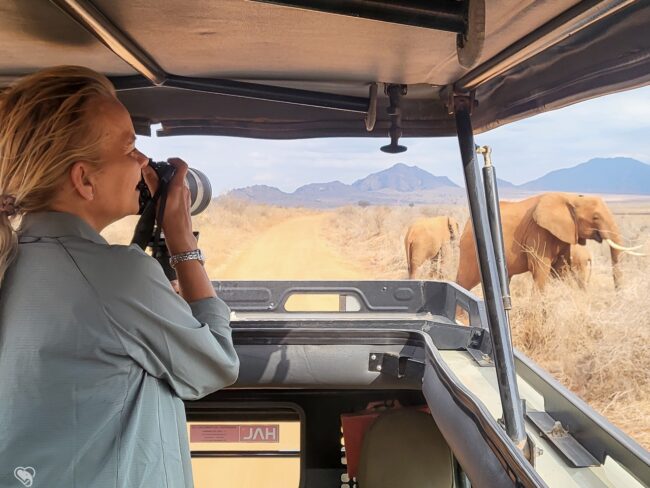
Photo: George Doherty
The Maasai Mara’s beauty defies expectations. Known simply as “The Mara,” its vast, golden savannahs stretch endlessly, dotted with flat-topped acacia trees that define the classic image of Africa. Covering over 1,500 square kilometers, the Mara is part of the Serengeti-Mara ecosystem, extending across the Kenya-Tanzania border into the even larger Serengeti National Park. This region is famed for the Great Migration, where millions of wildebeest, zebras, and other herbivores make their dramatic annual trek across the plains.
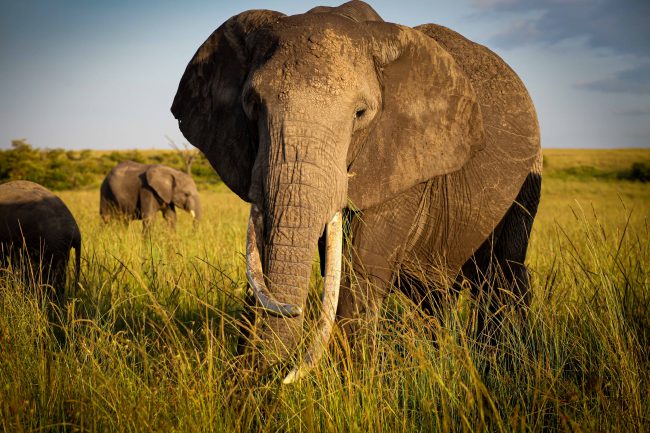
Wildlife is everywhere here, including the “Big Five”: lions, leopards, buffaloes, rhinos—and, of course, elephants. The Mara itself is home to around 2,500 elephants, with more than 7,500 roaming across the entire Serengeti-Mara ecosystem. But elephant populations in this region can change, their movements influenced by migration, poaching, and human-wildlife conflict.
The Maasai and the Mara
For centuries, the Maasai people have lived in harmony with this landscape, practicing a semi-nomadic lifestyle that blends seamlessly with the Mara’s rhythms. Grazing their livestock alongside wildlife, the Maasai have played a crucial role in maintaining the ecological balance of this extraordinary ecosystem.
However, as human settlements and agricultural land creep into the Mara’s wildlife corridors, coexistence has become more challenging. Habitat fragmentation has led to increased conflicts—lions preying on livestock, and elephants raiding crops. In response, the Maasai have partnered with conservation groups to create community-run conservancies that aim to balance sustainable land use with wildlife protection.
One of these organizations is the Mara Elephant Project (MEP), which I had the opportunity to visit.
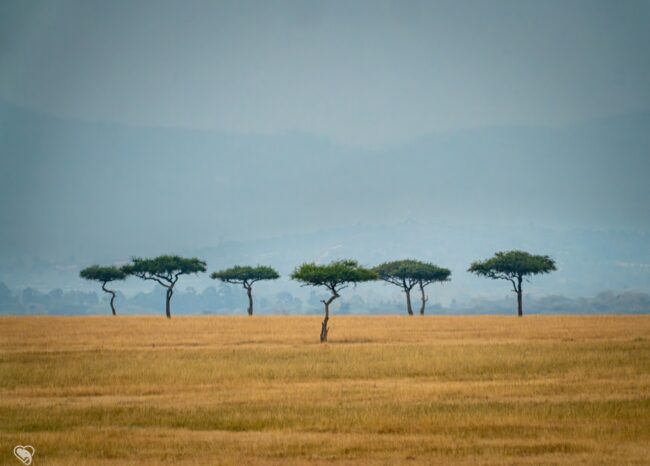
Photo: Patricia Sims
Meeting Fred
The Mara Elephant Project’s mission is to protect elephants and their habitats while fostering peaceful coexistence with local communities. They use innovative approaches, including GPS tracking collars and drones, to monitor elephant movements and respond swiftly to conflict areas.
One morning, I witnessed MEP’s work firsthand with Fred, a 56-year-old bull elephant known for his impressive tusks. Fred’s movements had caught the attention of the monitoring team—he was walking strangely, likely injured. Elephants like Fred, known as “big tuskers,” are particularly vulnerable to poachers, making it critical to keep him safe.
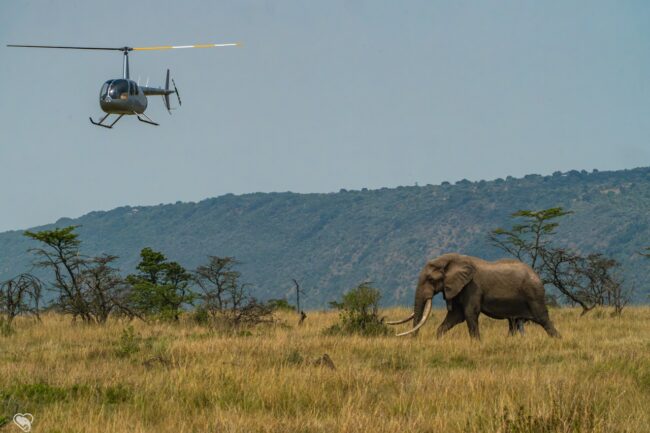
Photo: Patricia Sims
Using GPS data and drone surveillance, the team pinpointed Fred’s location. Within minutes, MEP’s helicopter was airborne, carrying a veterinary team from the Sheldrick Wildlife Trust in partnership with the Kenya Wildlife Service. I joined the ground team in a safari jeep, bouncing across the plains to meet Fred.
When we arrived, Fred stood in the distance, regarding us with suspicion. The helicopter hovered nearby, close enough for the vet to sedate him with a tranquilizer dart. As Fred slowed and collapsed, the team sprang into action.
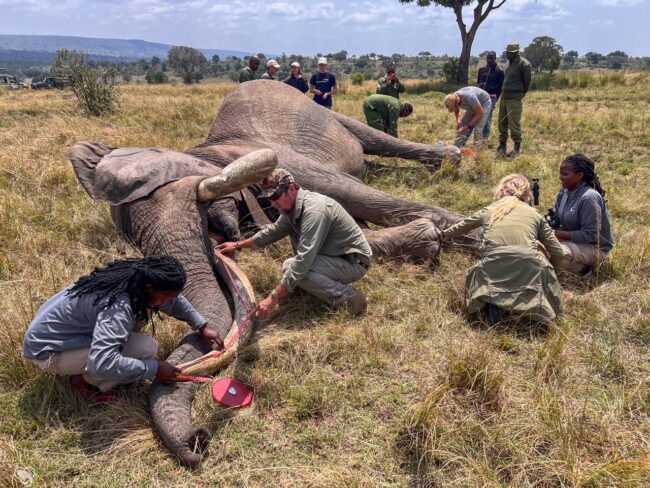
Photo: Dibblex Lesalon/MEP
Time was critical—the sedative would only last 20 minutes. Researchers and vets rushed to his side, measuring his tusks, checking his vitals, and treating a deep gash on his hind leg, likely caused by a farmer’s spear during a crop-raiding incident. Once their work was complete, we retreated to our vehicles and watched as Fred woke, gave himself a shake, and lumbered back into the brush.
Not every human-elephant conflict ends this well for either side. Witnessing MEP’s skilled, coordinated response gave me hope for the future of human-elephant coexistence in the Mara.
As habitat fragmentation increases, organizations like MEP are vital. Their use of cutting-edge technology and rapid response teams offers solutions that save lives—both human and elephant. While the challenges are immense, seeing the dedication of teams like MEP inspires optimism that coexistence is possible, even in an ever-changing landscape.
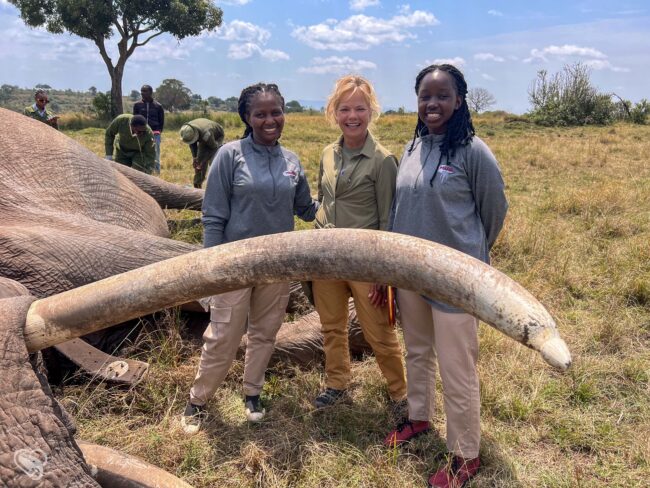
Photo: Dibblex Lesalon/MEP
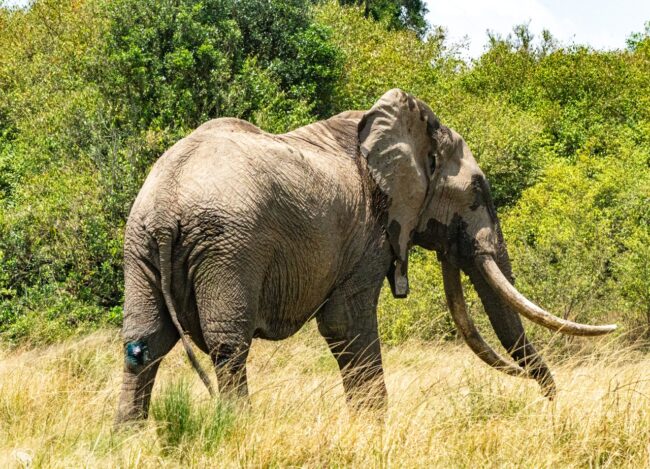
Photo: Patricia Sims
An Ever-Changing Landscape
Kenya’s landscape is ever-changing—a fact I witnessed firsthand as I traveled east across its diverse terrain to my next stop: Tsavo. Spanning approximately 22,000 square kilometers, Tsavo is Kenya’s largest national park. Its dramatic and diverse scenery is shaped by ancient volcanic activity, lava flows and covered in the distinctive iron-rich soil that gives the park—and its elephants—their famous red hue.
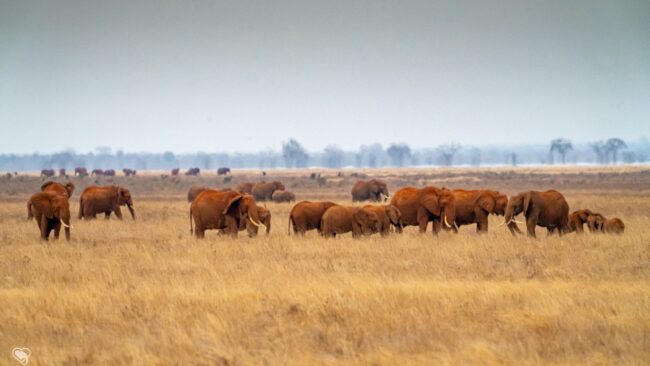
Photo: Patricia Sims
Tsavo is home to nearly 13,000 elephants, the largest population in Kenya, known as the “red elephants” because they dust bath themselves in the park’s ruddy soil. Established in 1948, Tsavo was divided into two sections—Tsavo East and Tsavo West—by the Nairobi-Mombasa highway, Kenya’s major artery connecting the capital to the coast.
Pulling off the highway into the Tsavo East park gate, I was greeted by a group of bull elephants gathering around a human-made watering hole. Young and old bulls interacted against the backdrop of power lines and road traffic—an ironic reminder of how human civilization edges ever closer to wild spaces. Yet here, in the gripping wildness of Tsavo, nature still seems to hold its ground.
Tsavo East is a vast, untamed wilderness of red plains interspersed with iconic baobab trees and traversed by the lifeline of the Galana River. It supports an extraordinary variety of wildlife. Beyond the “Big Five,” you’ll find giraffes, zebras, antelopes, cheetahs, leopards, baboons, hyenas, and hundreds of bird species. Yet, Tsavo East is most famous for its herds of red elephants.
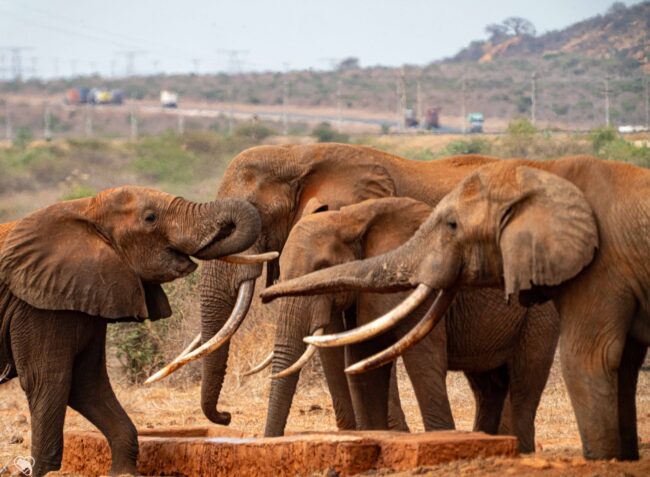
Photo: Patricia Sims
Protecting Tsavo’s Elephants
During the peak of the ivory poaching crisis between 2010 and 2019, Tsavo’s elephants were especially vulnerable. The park’s vastness made it difficult to patrol, and it became a focal point for poachers. Over that decade, an estimated 500 to 1,000 elephants were killed for their tusks. The true toll is likely higher, as the sheer scale of Tsavo makes many losses impossible to record.
Amid this crisis, conservation groups rallied together to save Tsavo’s elephants. World Elephant Day became an important rallying point, amplifying awareness and action. One of the key organizations leading the charge was the Sheldrick Wildlife Trust (SWT). Visiting with SWT—an organization that recognizes and embraces the significance of this global awareness day—was particularly meaningful for me.
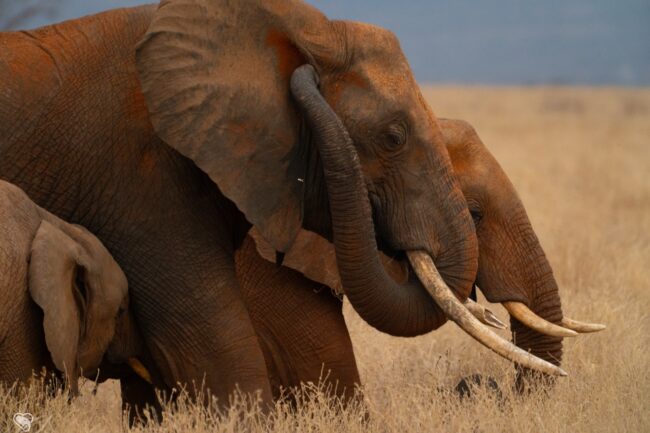
Photo: Patricia Sims
Founded in 1977 by Dr. Dame Daphne Sheldrick in memory of her husband David Sheldrick, the founding warden of Tsavo East, SWT has become synonymous with elephant conservation. The world lost Dame Daphne in 2018, but her legacy lives on through her daughter, Angela Sheldrick, SWT’s CEO. Angela continues to lead the Trust with a clear vision: to protect Tsavo’s elephants and preserve its wilderness.
The Orphans of Tsavo
SWT is perhaps best known for its groundbreaking Orphan Project—the world’s first and most successful elephant rescue and rehabilitation program. Orphaned elephants are rescued from tragic circumstances that separate them from their mothers, often caused by poaching, drought, or human-wildlife conflict. Traumatized and alone, young elephants rely on the SWT keepers, who are gifted with a special understanding of the orphans’ needs and provide around-the-clock care and emotional support.
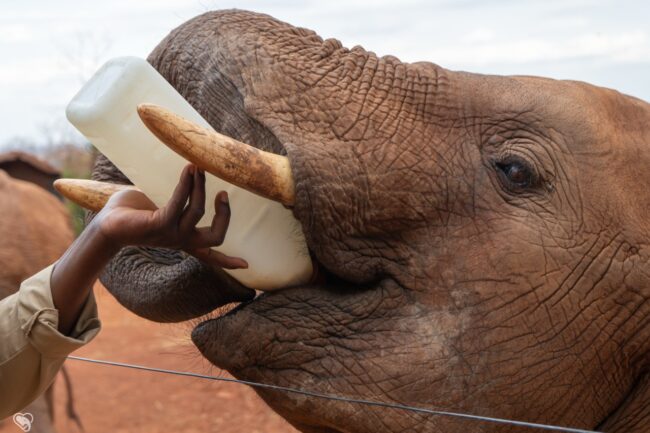
Photo: Patricia Sims
At the SWT Nairobi Nursery, the orphans receive the specialized milk formula Dame Daphne spent years perfecting—a mix that replicates the nutrients of elephant milk, tailored to each calf’s age and needs. After a few years, when the elephants grow stronger and more confident, they “graduate” to one of SWT’s reintegration units, including the Voi Reintegration Unit in Tsavo East.
Visiting the Voi Unit was a highlight of my time in Tsavo East. Watching these young elephants was like observing students in their final stage before heading into the world. Under the watchful eyes of their keepers, the orphans roam freely, browsing, exploring, and socializing in the brush. Around midday, they eagerly charge back into the station for a quick pit stop—a bottle of the specialized milk— before returning to the wild bush for the afternoon.
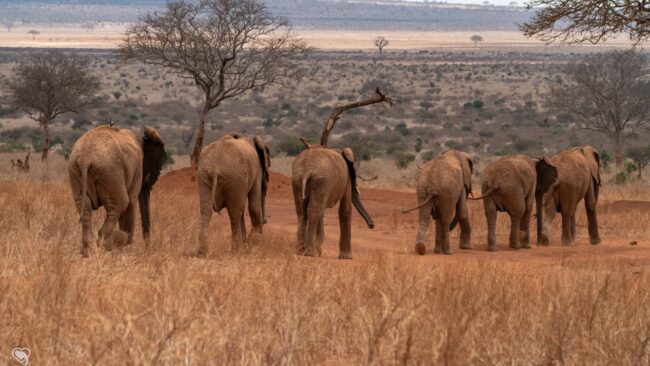
Photo: Patricia Sims
At night, the orphans retreat to the safety of their stockades, protected from predators and poachers. This process continues for several years, until the elephants themselves decide they are ready for the wild. I asked the head keeper how they know when that time comes. He smiled and said, “Each elephant is different. Some can’t wait to leave, full of confidence. Others take their time. Just like young adults, they’ll let us know when they’re ready.”
A Legacy of Success
To date, SWT has raised over 320 orphaned elephants, with 60 wild-born babies to ex-orphan mothers—a true testament to the program’s success in replenishing Tsavo’s elephant population. But SWT’s impact extends far beyond the Orphan Project.
Working closely with the Kenya Wildlife Service (KWS), SWT operates anti-poaching teams, aerial surveillance, mobile veterinary units, and community outreach programs. These efforts ensure that Tsavo’s wilderness remains safe and sustainable—not only for the orphaned elephants but also for the countless other species that call it home.
As I watched the Voi orphans return to the bush, I couldn’t help but feel hopeful. Seeing them thrive—nurtured by human hands, yet destined for the wild—was a powerful reminder of what’s possible when dedication, innovation, and compassion come together to protect the natural world.
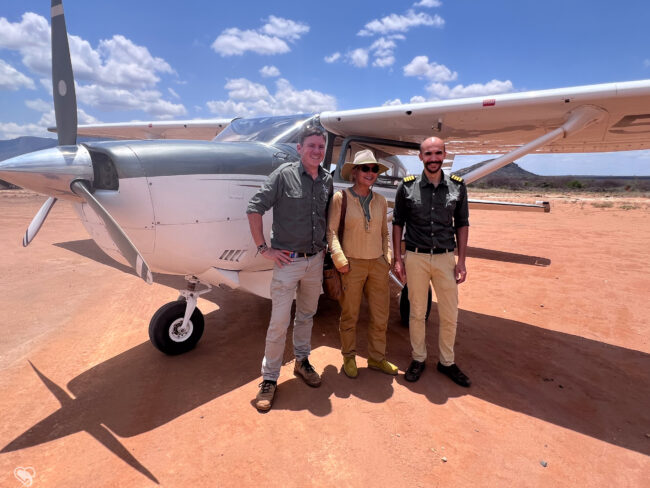
Photo: George Doherty
When Community, Conservation, and Compassion Meet
Flying in a Cessna over northern Kenya, I am spellbound by the pristine wilderness of the Sarara Valley. Peaks, forests, and plains unfold at the base of the Mathews Mountain Range, a breathtaking landscape safeguarded from the encroachments of human development by the Samburu people, who have called this region home for centuries. The small aircraft touches down, and I step onto the gravel airstrip, embraced by the intense heat and sunlight. I feel an overwhelming sense of privilege to be in this place where community, conservation, and compassion converge.
The Sarara Valley lies within the Namunyak Community Conservancy, established in 1995 by the Samburu tribal elders. They set aside 850,000 acres of their traditional lands to protect the future of their community, wildlife, and environment. This was an act of healing for a landscape ravaged by poaching. During the height of the ivory trade, the region’s once-thriving populations of 4,000 black rhinos and 15,000 elephants were reduced to near extinction by the early 1990s.
Through the efforts of Piers and Hilary Bastard, third-generation Kenyans who formed a deep bond with the Samburu, the seeds of a new model for sustainable tourism and wildlife conservation were planted. In 1997, they worked with the Samburu to establish Sarara Camp, a locally owned initiative that generated revenue for the community while incentivizing wildlife protection. Today, Sarara Camp stands as a beacon of community-led ecotourism. Over 6,000 elephants now roam the Mathews Range—a testament to the recovery made possible by these efforts.
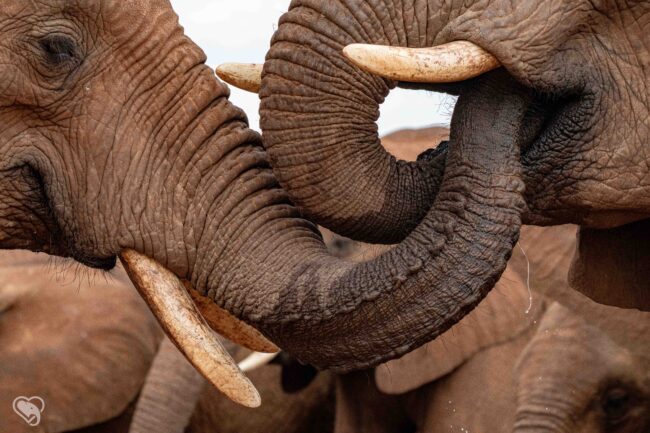
Photo: Patricia Sims
Reteti Elephant Sanctuary: A Community-Driven Triumph
In 2016, Piers and Hilary’s youngest son, Jeremy Bastard, and his wife, Katie Rowe, co-founded the Reteti Elephant Sanctuary, Africa’s first community-owned and operated elephant sanctuary. Reteti rescues orphaned and abandoned baby elephants, rehabilitating them for eventual release into the wild. Many orphans are victims of prolonged droughts exacerbated by climate change, while others are separated from their mothers after falling into wells dug by herders.
Initially, the sanctuary relied on imported powdered milk to feed the calves. However, Reteti’s keepers discovered that goat milk, sourced locally, provided better nutrition. This breakthrough led to the creation of the “Milk Mamas” program, in which over 1,200 Samburu women now supply 800 liters of goat milk daily. This program not only nourishes the elephants but also provides sustainable income for the women, empowering them economically.
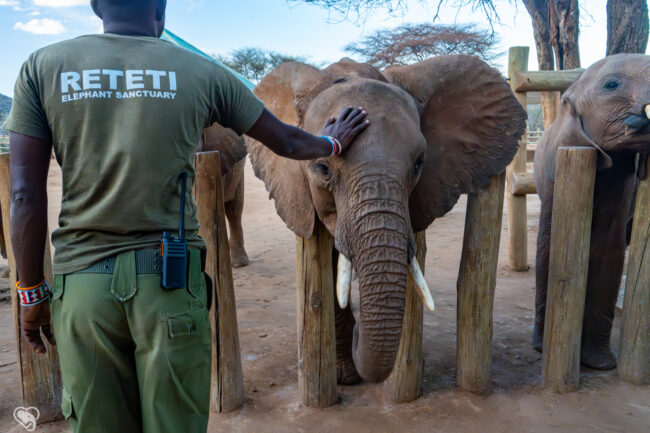
Photo: Patricia Sims
Reteti embodies the Samburu people’s spiritual connection to elephants, who they revere as wise and sentient beings. Many of Reteti’s keepers are indigenous Samburu women—a significant cultural shift in a traditionally patriarchal society. Watching the baby elephants eagerly run to their keepers for milk while being serenaded with soft Samburu songs is a moment of pure joy. The bond between these caregivers and the elephants is extraordinary, and I am mesmerized by the mutual trust and affection.
Recently, Reteti celebrated the release of 13 rehabilitated elephants back into the wild. These elephants now roam freely within the Namunyak Conservancy, monitored by rangers to ensure their safety. Their release symbolizes renewal for a region once on the brink of losing its elephants entirely.
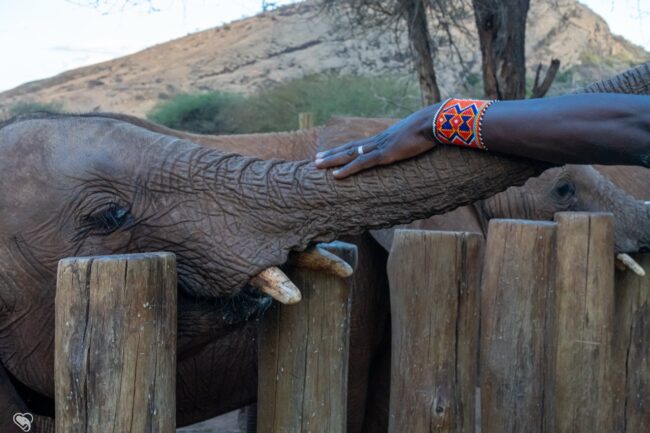
Photo: Patricia Sims
A Hub for Advocacy and Education
During my visit, the Namunyak Conservancy is abuzz with excitement over the opening of its new community center, a milestone in community-led conservation. The center, supported by the Sarara Foundation and partners like Save the Elephants, was inaugurated in November 2024 with Kenya’s President Ruto and Samburu tribal leadership in attendance.
The center is designed as an interpretive space, educating visitors about northern Kenya’s elephants and the challenges they face, from climate change-induced droughts to human-wildlife conflict. It celebrates the Samburu people’s pivotal role in conservation, showcasing their cultural heritage and their deep connection to the land and its wildlife.
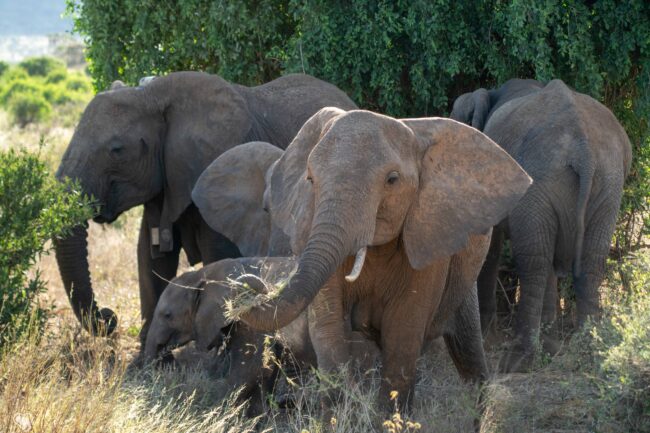
Photo: Patricia Sims
A Visit to Save the Elephants
My last stop takes me to the Samburu National Reserve, a two-hour potholed drive from Namunyak to visit Save the Elephants’ research station. In this stunning 165 square kilometre terrain shaped by rugged mountains, grassy plains, and dense forests nourished by the Ewaso Ng’iro River live approximately 900 elephants, who are considered the best studied group in Kenya.
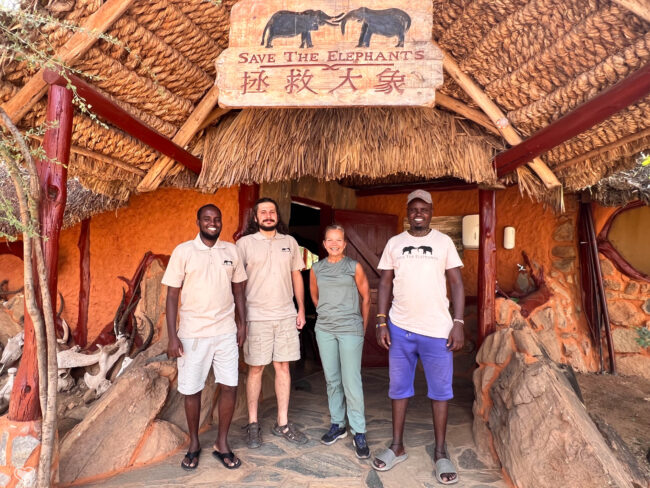
Photo: Jane Wynard/Save the Elephants
Save the Elephants has been established here since 1993, founded under the leadership of Dr. Iain Douglas-Hamilton, one of the world’s leading elephant experts. His work has pioneered groundbreaking research, including the development of GPS collaring technology. These collars, equipped with satellite tracking, provide real-time data on elephant movements, social dynamics, and habitat use. This innovation has opened a window into their world, revealing how they adapt to environmental changes and navigate human-dominated landscapes , offering invaluable insights that inform conservation strategies across Africa.
Save the Elephants recognizes World Elephant Day as a vital platform for advocacy and education, and having this opportunity to see their work firsthand reinforces my belief in the power of research and knowledge-sharing to shape a brighter future for elephants.
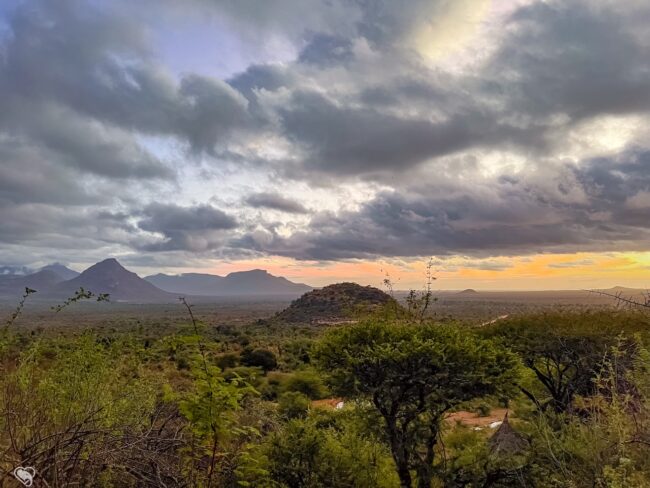
Photo: Patricia Sims
A Hopeful Future
The plight of African elephants remains dire. Over the past 50 years, across Africa savanna elephant populations have declined by 70%, while forest elephants have suffered a staggering 90% drop. Yet, conservation initiatives in Kenya provide a glimmer of hope. The National Wildlife Census 2021 reported a 12% increase in Kenya’s elephant population, a testament to the effectiveness of habitat protection, community involvement, and monitoring efforts.
The organizations I visited embody the collaborative spirit necessary to turn the tide. Their efforts align with the global mission of World Elephant Day: to inspire awareness, action, and hope. Witnessing their work has deepened my understanding of the profound connection between humans and elephants and the critical importance of protecting this relationship.
One moment will stay with me forever. After a late afternoon rain, I join a game drive through Sarara Valley. Wildlife surrounds us: reticulated giraffes, African wild dogs, Grevy’s zebras, leopards, lions, ostriches, and vibrant birdlife. As the rain clears, a perfect rainbow arches across the sky, framing a herd of elephants in the distance. The scene is so beautiful, so perfect, it feels just like nature should be.
They say Africa gets into your heart, and now I understand why. This land, its people, and its elephants have left an indelible mark on mine. As I leave to return to Canada, one thing is certain: this is not goodbye—it’s until next time.
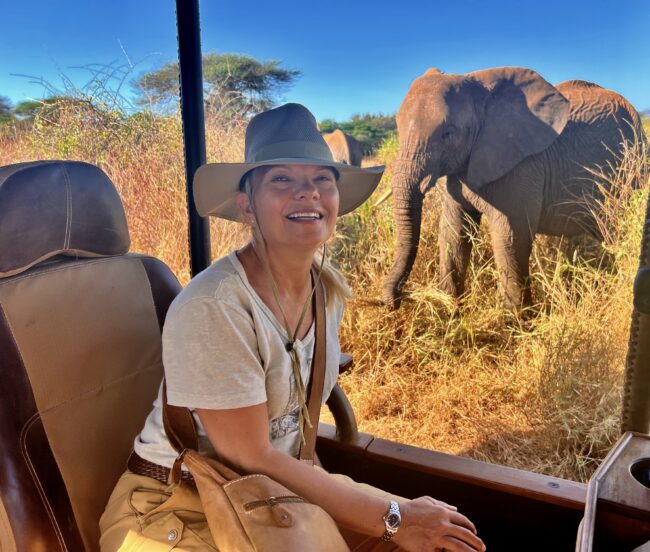
Photo: George Doherty