Written by Ashley Bowes
Nong Mai, an orphaned Asian elephant captured from the wild, was three years old when filmmaker and World Elephant Day founder Patricia Sims first met her. On the streets of Bangkok, she was being used to beg tourists for money in exchange for sugarcane. Patricia embedded herself in the community of the mahouts, a term for elephant keepers — following Nong Mai between the city and their rural village in Surin Province for more than a year to tell her story and understand why the elephant was being illegally exploited.
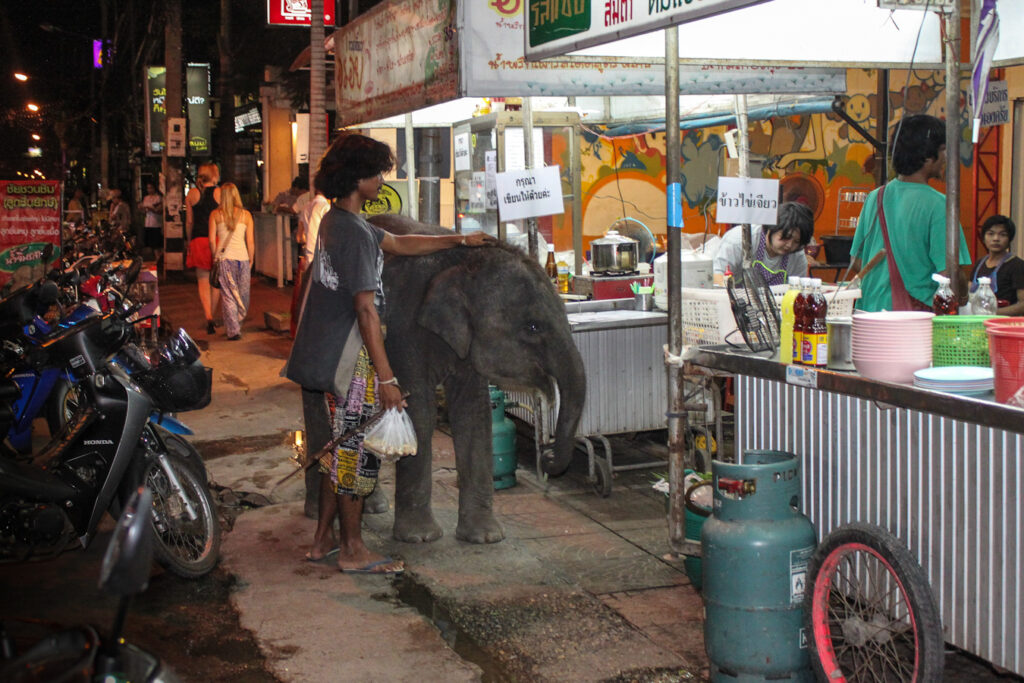
Street begging elephant in Thailand / Photo credit: Patricia Sims
Eventually, Nong Mai was sold and rescued by the Elephant Reintroduction Foundation, a Thai Royal organization working to return elephants to protected habitat. A year later, when Patricia headed into the wild to find her, she waited by a watering hole where the herd came to drink. Nong Mai emerged from the trees, noticeably bigger and healthier than the last time Patricia had seen her. She walked straight up to Patricia and wrapped her trunk around her waist, similar to how humans would greet an old friend.
Nong Mai remembered, and her gentle touch with her trunk is what elephants do to stay bonded, build trust, and resolve conflict. This moment points to something larger — elephant and human values aren’t so different.
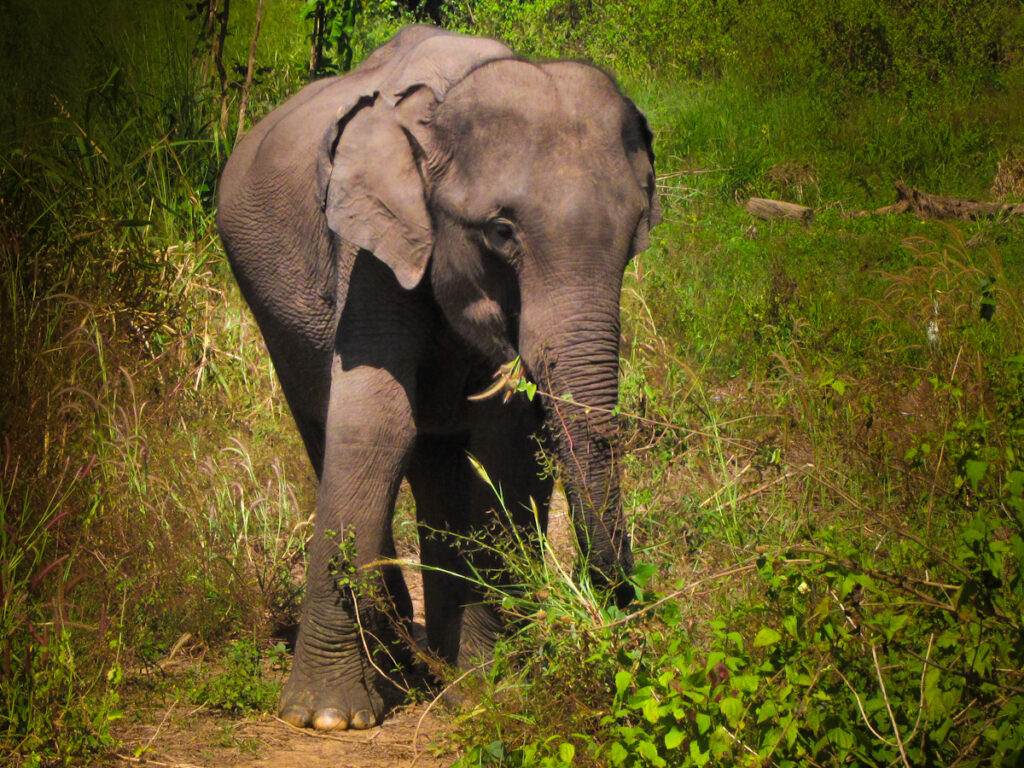
Nong Mai re-wilded in the Sublangka sanctuary, Elephant Reintroduction Foundation, Thailand / Photo credit. Patricia Sims
“We’re a lot like elephants, or they’re a lot like us,” says Patricia. Both humans and elephants are facing heightened stress right now — shrinking habitats, climate change, and rapid change to our ways of life.
Elephants embody many of the qualities humanity needs most: empathy, memory, cooperation, patience, family loyalty, and care for the world around them. They live in complex societies, protect one another, grieve their dead, and remember relationships across generations.
“Be More Like Elephants” is a chance to understand ourselves, each other, and the wildlife we share this planet with a little more deeply.
What Elephants Can Teach Us
Family is everything
Elephants maintain close family ties through touch, contact rumbles when separated, and greeting ceremonies when they reunite. Their society is fluid — groups split into smaller units when food is scarce or numbers grow too large, then reunite once conditions improve, never losing the bond that holds them together. At the center is the mother-calf relationship, and from there the circle widens into families, extended relatives, and eventually elephants they’ve never met but still recognize as their own kind. Kin look out for each other first, but elephants support non-kin too. They defend one another in danger and greet each other with equal warmth, whether they’ve been apart for hours or years. Not unlike how our own family units move, grow, and reunite over time.
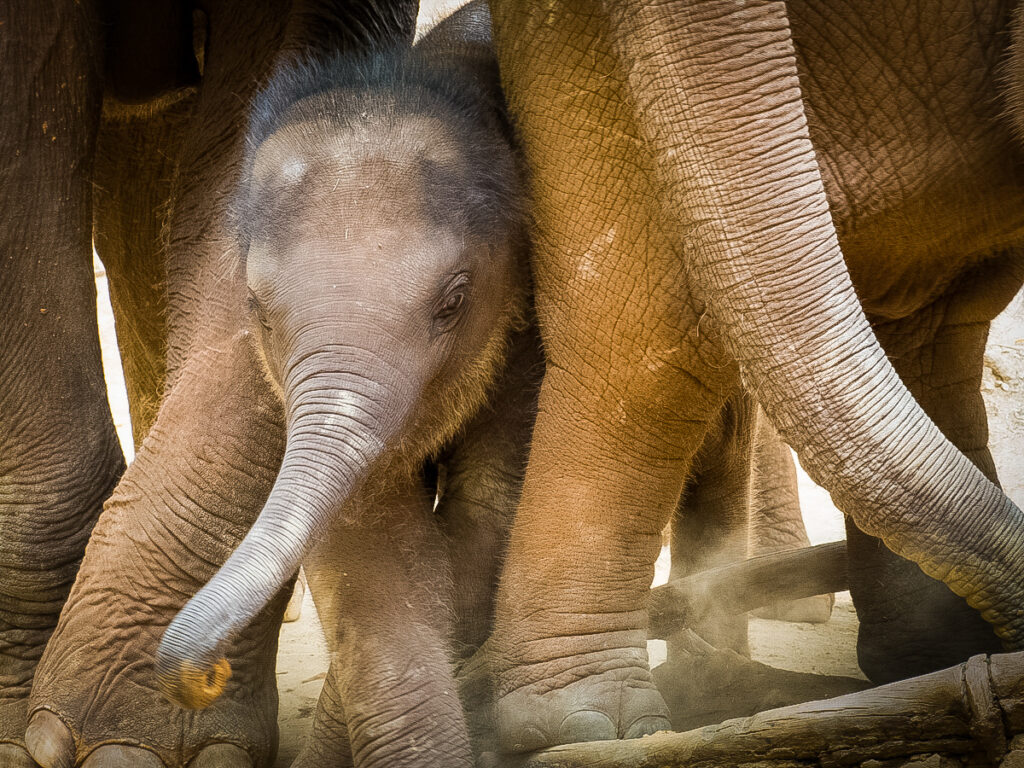
Asian elephant family, Thailand / Photo credit: Patricia Sims
Strong communication and deep listening are key
Family ties hold largely because elephants are extraordinary communicators. They call each other by name, recognize the voices of hundreds of other elephants up to two kilometers away, and rely on scent and touch. They use their trunks to comfort a calf or calm a companion in distress, and stay connected.
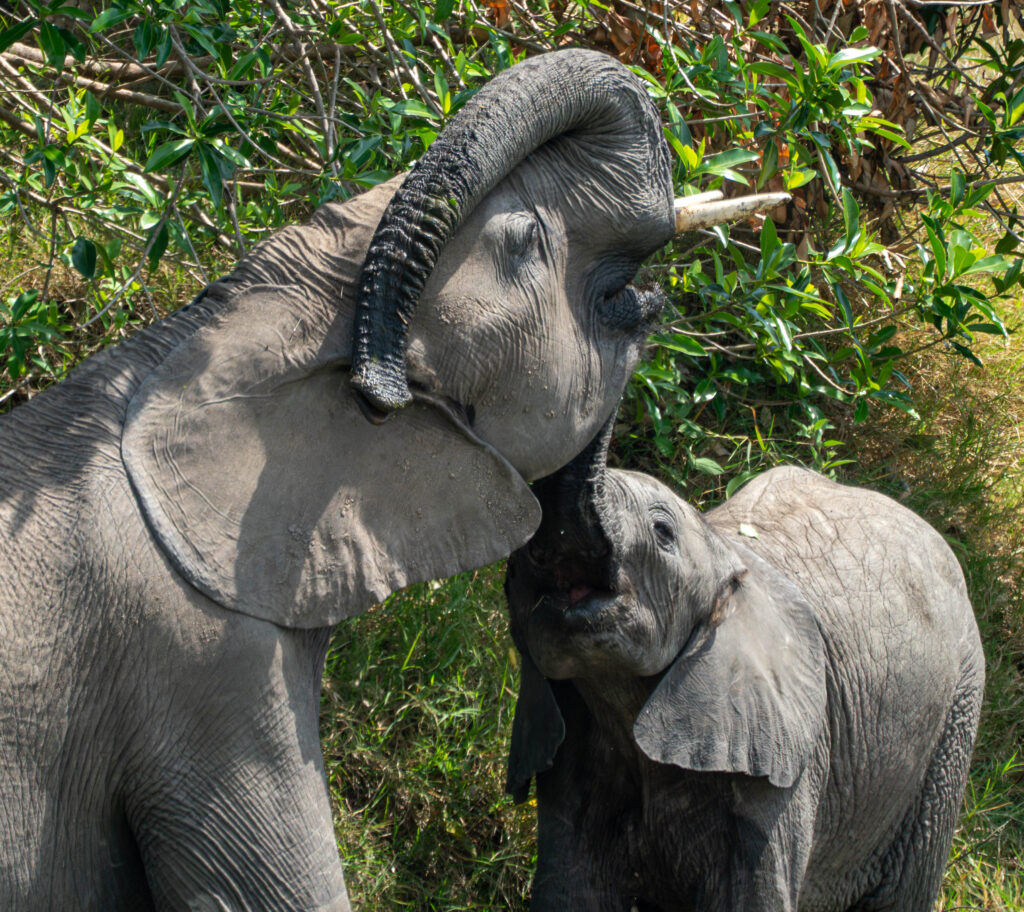
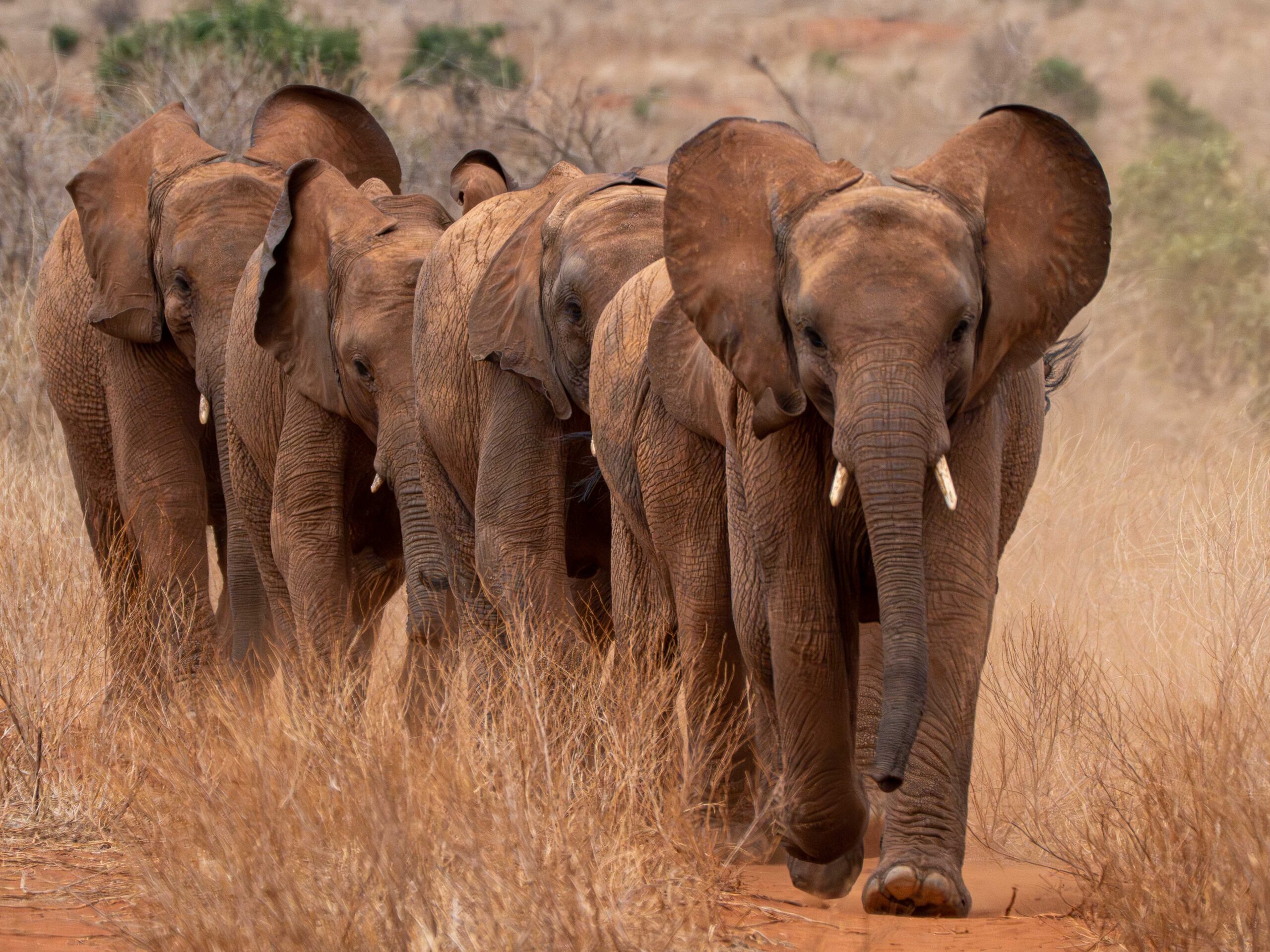
African savanna elephants, Kenya / Photo credit: Patricia Sims
Elephants are deep listeners too. Low-frequency rumbles travel through the ground as vibrations, picked up through sensitive receptors in their feet and carried through bone straight to the inner ear, audible from as far as six miles away. That same sensitivity works both ways, letting them move through dense brush in near silence despite their size.
Empathy extends beyond their own kind
Loyalty and empathy don’t stop at the bloodline. At Sheldrick Wildlife Trust in Kenya, orphaned elephants raised by human keepers often grow up to protect them the way they’d protect a herd member. One elephant appointed herself bodyguard to her keepers, sounding the alarm at the first sign of danger. When a keeper fell and injured his eye, she rushed to his side, trumpeted for help, and patted him with her trunk until the rest of the team arrived.
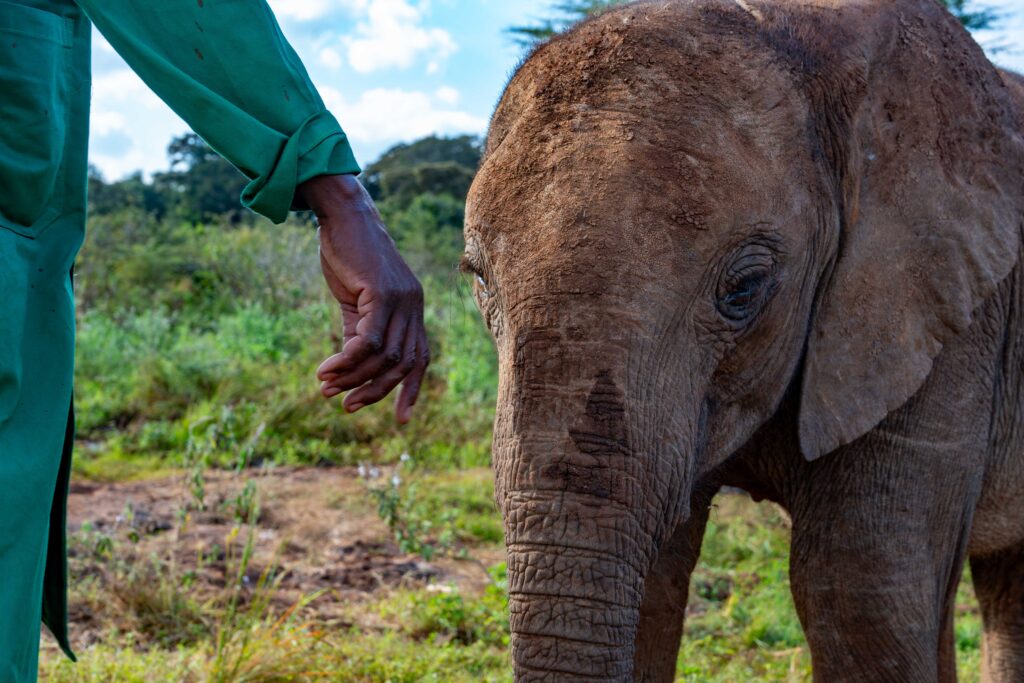
Sheldrick Wildlife Trust / Photo credit: Patricia Sims
Permission to love and grieve
Elephants perform funeral-like rituals — touching a dead companion’s body gently and repeatedly, standing vigil in silence for over a day, sometimes covering the body with leaves and branches. When the beloved Amboseli super tusker Tolstoy died of a spear wound, likely from a farmer defending his crops, his family arrived one by one to pay their respects, each gently touching his body. They grief for other species too. When conservationist Lawrence Anthony, “the Elephant Whisperer” of South Africa’s Thula Thula reserve, died suddenly in 2012, two herds from opposite corners of the reserve, walked for hours to his house and stood vigil outside of it for two days.
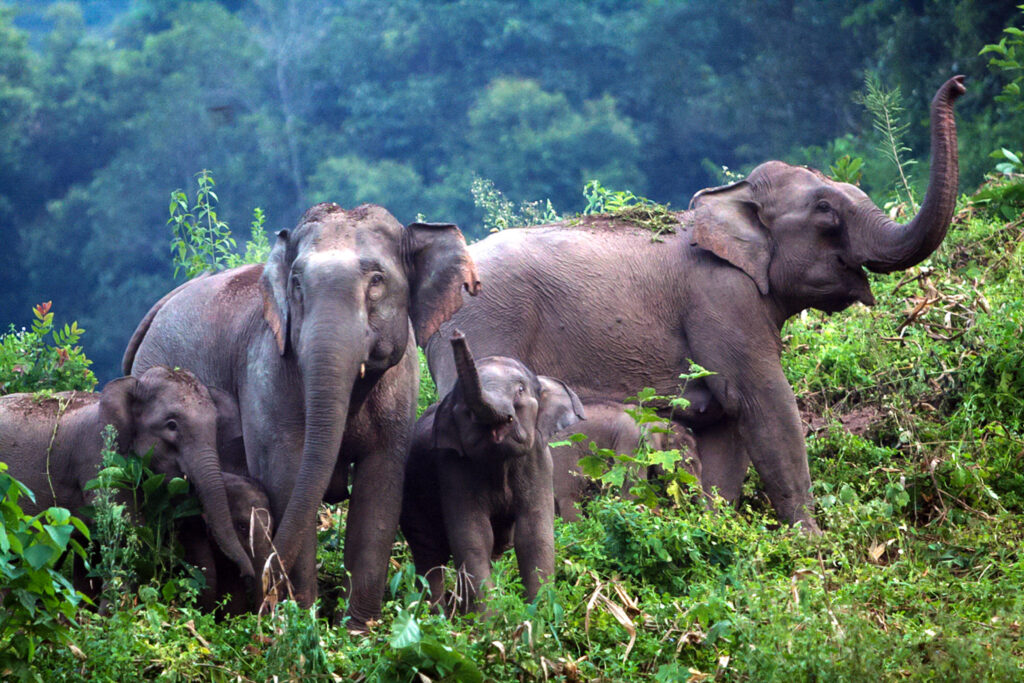
Wild Asian elephants, Yunnan, China / Photo credit: Roger Aidong Luo
Memories to last a lifetime
“Elephants never forget” isn’t just a saying; it’s biology. Their hippocampus, temporal lobes, and amygdala — the brain’s centers for memory and emotion — are unusually large, helping elephants recall places, individuals, and relationships across decades and generations.
That memory holds both harm and kindness: in China’s Yunnan Province, Patricia recalls learning how elephants harmed by farmers returned months later to the same farms, as if settling a score. Meanwhile Nong Mai, the orphaned elephant Patricia documented, seemed to carry a lasting awareness of the people who helped her return to the wild.
A matriarch’s recollection of a water source can mean the difference between survival and starvation for her family. For elephants, and for us, what we remember shapes who we become.
Stewards of the planet
Elephants also shape the very land they live on, sustaining ecosystems far beyond themselves. As they move, they disperse seeds through their dung, dig for water, and clear paths through dense vegetation. “They’re geoengineers for their habitat,” Patricia says. “In a sense, caretaking for that habitat.” She considers stewardship the single most important quality humans could learn from elephants — and it shows in how they lead.
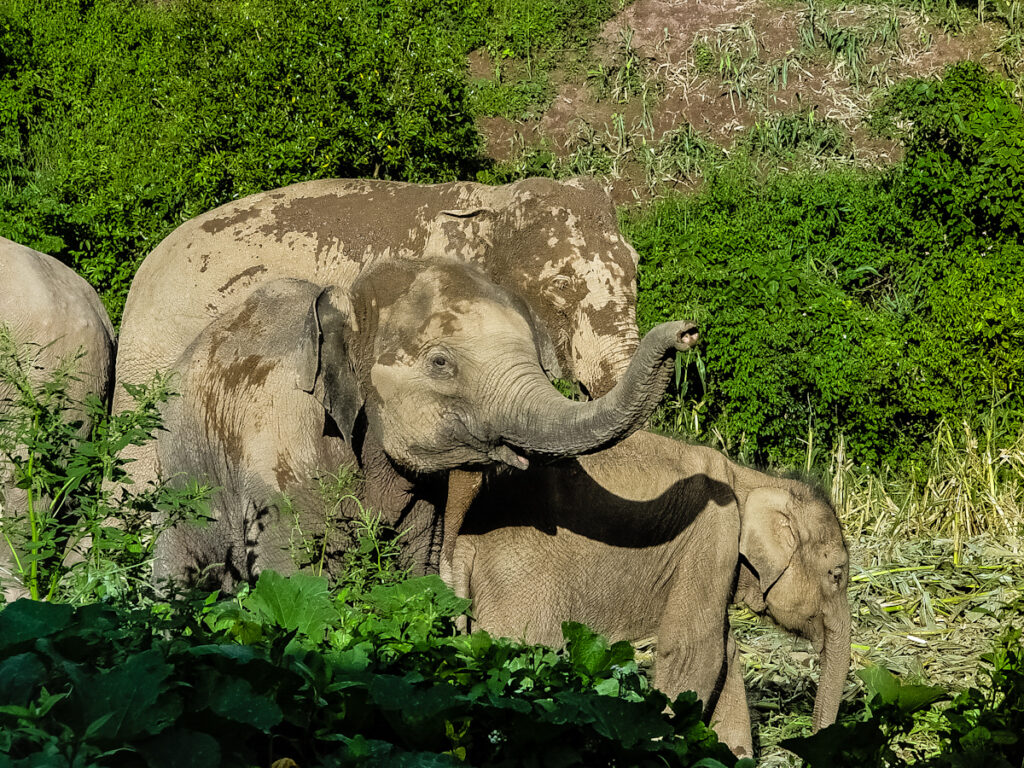
Wild Asian elephants crop raiding, Yunnan, China / Photo credit: Roger Aidong Luo
Lead with care
Elephant herds are matriarchal but rarely autocratic. Even a juvenile can propose a direction, and decisions are usually reached together, negotiated rather than dictated. A matriarch’s authority isn’t built on dominance. It’s built on trust, earned over decades of remembering where the water is, who the old threats were, and how to keep her family safe when it matters most.
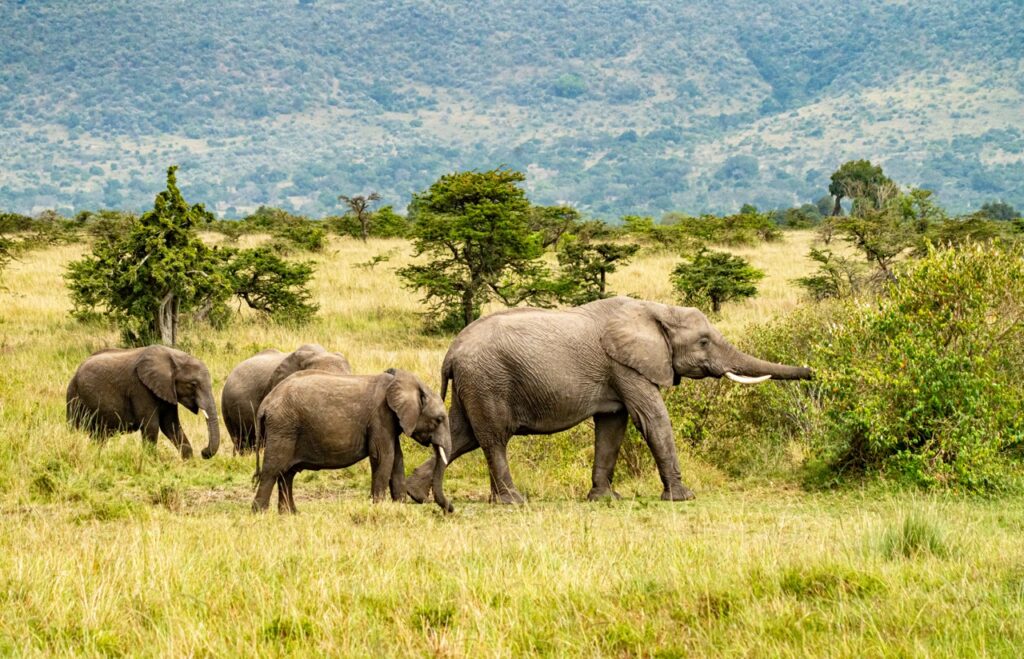
African savanna elephant family, Kenya / Photo credit: Patricia Sims
Habitats are shrinking, conflict is increasing
Across Africa and Asia, elephants are increasingly being pushed into conflict with the people who share their land. Elephants aren’t predatory. Left alone, they’re peaceful. But habitat loss, climate change, agricultural expansion, and resource extraction are shrinking the space they need to survive.
Conflict falls hardest on the countries that receive the least conservation attention. Kenya, South Africa, and Botswana draw tourism revenue that funds real conservation infrastructure. Smaller elephant-range countries like Cameroon and Nigeria — largely don’t, leaving less incentive to invest in the corridors and ranger programs that reduce conflict. In Cameroon, volcanic lava flows have cut off part of the Mount Cameroon elephants’ historic range. Without pragmatic and inclusive long-term solutions in place, elephants increasingly raid nearby farms, and farmers retaliate by harming elephants.
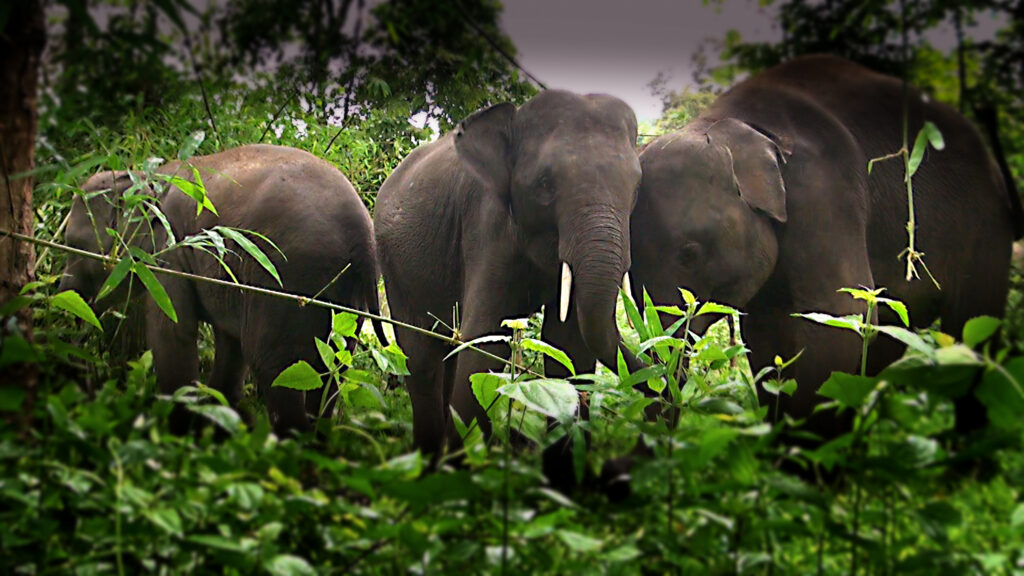
Young Asian elephants returned to the wild, Elephant Reintroduction Foundation, Thailand / Photo credit: Michael Clark
In India, home to more than half the world’s wild Asian elephants, forests are cleared for farms, roads, and railways, and elephants are forced to roam further to meet their needs. That increased movement drives conflict. Over 500 people die in elephant encounters every year, and elephants damage close to a million hectares of crops annually.
Sri Lanka, home to one of Asia’s largest wild elephant populations, has fared just as badly: over the past nine years, the country has lost more than 3,400 elephants and 1,100 people to the conflict.
It’s a win-win when elephants and humans learn to live in peaceful coexistence
Where communities, scientists, and governments have invested in prevention, human-elephant conflict declines. In Kenya, Save the Elephants pioneered beehive fences that discourage elephants from approaching and enable local communities to sell the honey the bees produce. A strategy that’s since spread from Malawi to Sri Lanka. The Mara Elephant Project uses GPS collars and drones to monitor elephants and can respond to conflict quickly with helicopter veterinarian and ranger teams, treating injured elephants before wounds turn fatal.
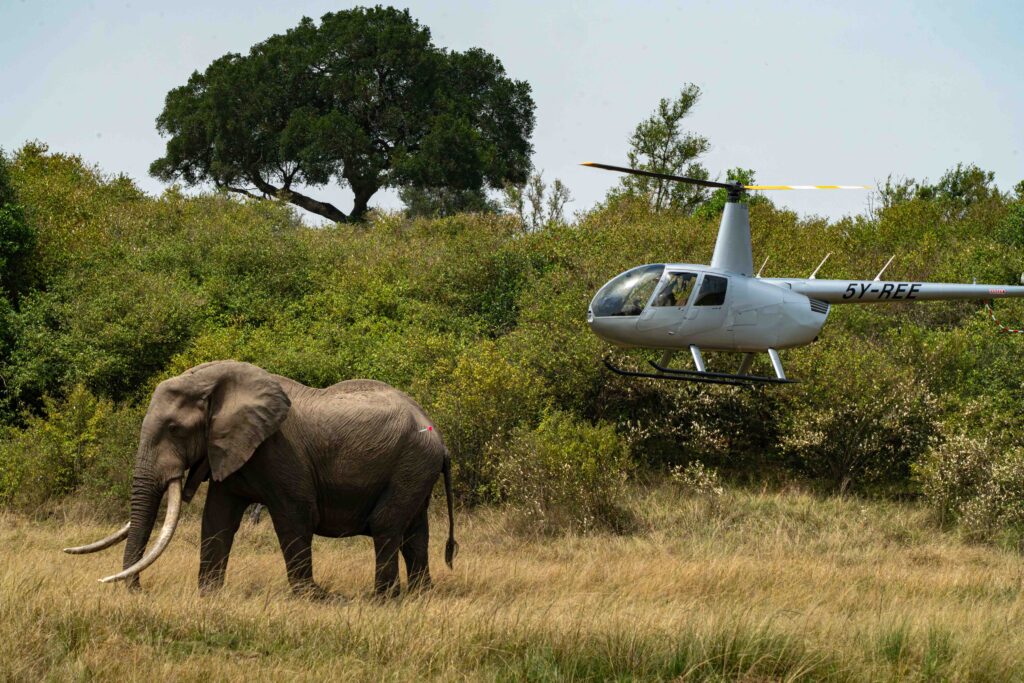
Fred the tusker, treated by Mara Elephant Project mobile vet team, Kenya / Photo credit: Patricia Sims
In China’s Yunnan Province, ecologist Dr. Li Zhang has helped plant buffer belts of native vegetation along protected forest edges, giving elephants enough natural food that they have little reason to raid nearby farms, paired with an early-warning network that’s cut alert times to as little as ten seconds. The region’s wild elephant population has more than doubled since the 1980s.
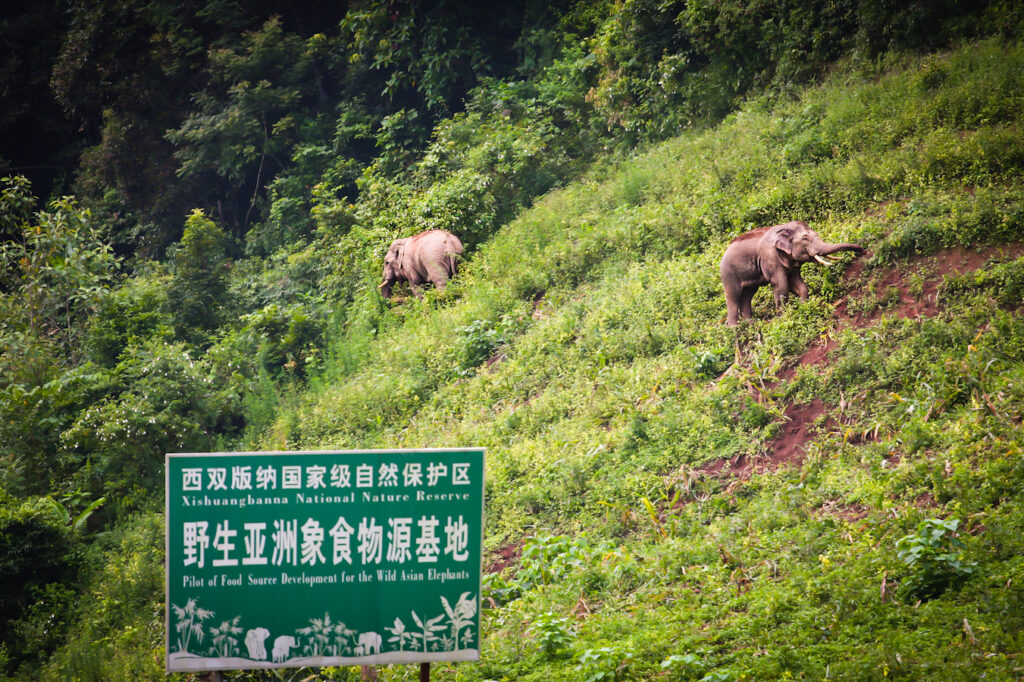
Wild elephants foraging buffer crops, Yunnan, China / Photo credit: Roger Aidong Luo
India and Sri Lanka have both leaned into elephant corridors, which protect strips of habitat that let herds move safely between fragmented forests. The Wildlife Trust of India has helped identify and protect over 100 corridors nationwide, while Sri Lanka’s 2020 national action plan has pushed similar community-led strategies over harmful elephant drives, with early results showing real promise.
Orphan rescue and rewilding programs tell a parallel story of recovery. In Kenya, Sheldrick Wildlife Trust has raised more than 320 orphaned elephants since 1977, many now with wild-born calves of their own. Further north, in the Namunyak Conservancy, ancestral land of the Samburu people, the Reteti Elephant Sanctuary is Africa’s first Indigenous-owned and -run elephant sanctuary, staffed entirely by Samburu keepers who feed orphans goat milk supplied by over 1,200 Samburu women. In South Africa, HERD, the country’s first dedicated elephant orphanage, rehabilitates orphaned calves, integrating them slowly into a resident herd until they’re ready to be considered for rewilding.
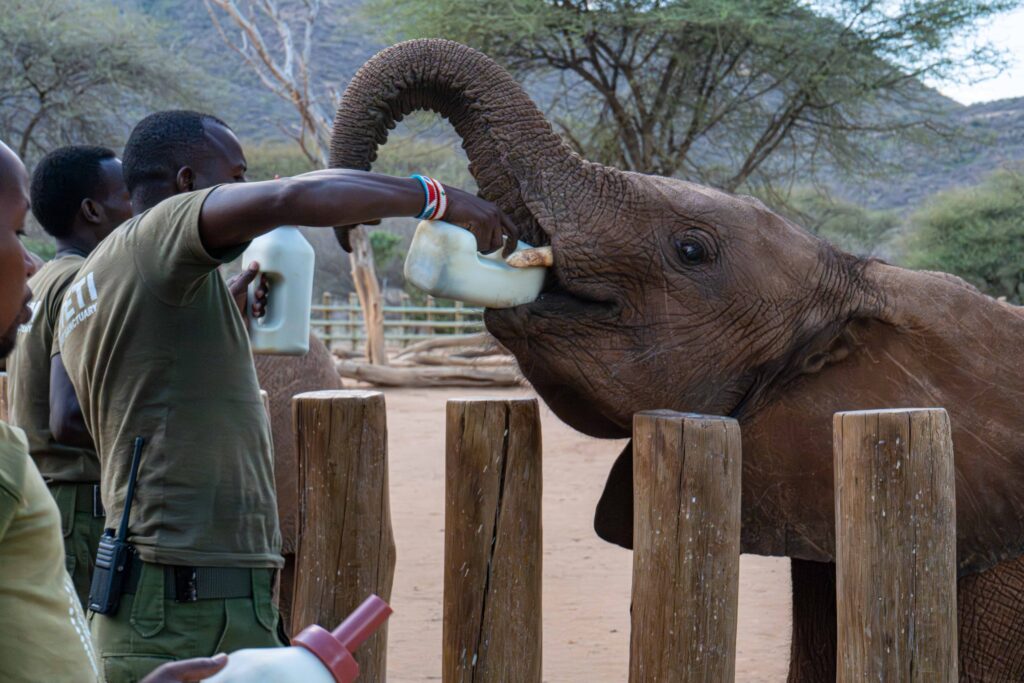
Retetie Elephant Sanctuary, Kenya / Photo credit: Patricia Sims
The Elephant Reintroduction Foundation, Patricia’s original conservation partner and World Elephant Day’s co-founding organization in Thailand, has reintroduced over 150 elephants to the wild and had success with more than 20 calves being born in their natural habitat. Nong Mai herself is proof of what’s possible: she’s since had two calves of her own, one born on Christmas Day.
Why this matters now
Like us, elephants protect what matters most to them. They need space, safety, family, food, water, and a future to survive.
They extend empathy far beyond their own herd, reminding us to feel our own emotions and lean on each other in return. To “Be More Like Elephants” means choosing care over indifference, memory over forgetfulness, cooperation over conflict, and long-term responsibility over short-term gain. It also means taking care of and being stewards of our habitats, just like elephants do. Protecting them was never only about saving one species — it’s about protecting the ecosystems, biodiversity, and communities connected to them.
To learn more about the organizations working to protect elephants and support their work to reduce human-elephant conflict, visit the Friends of World Elephant Day page.
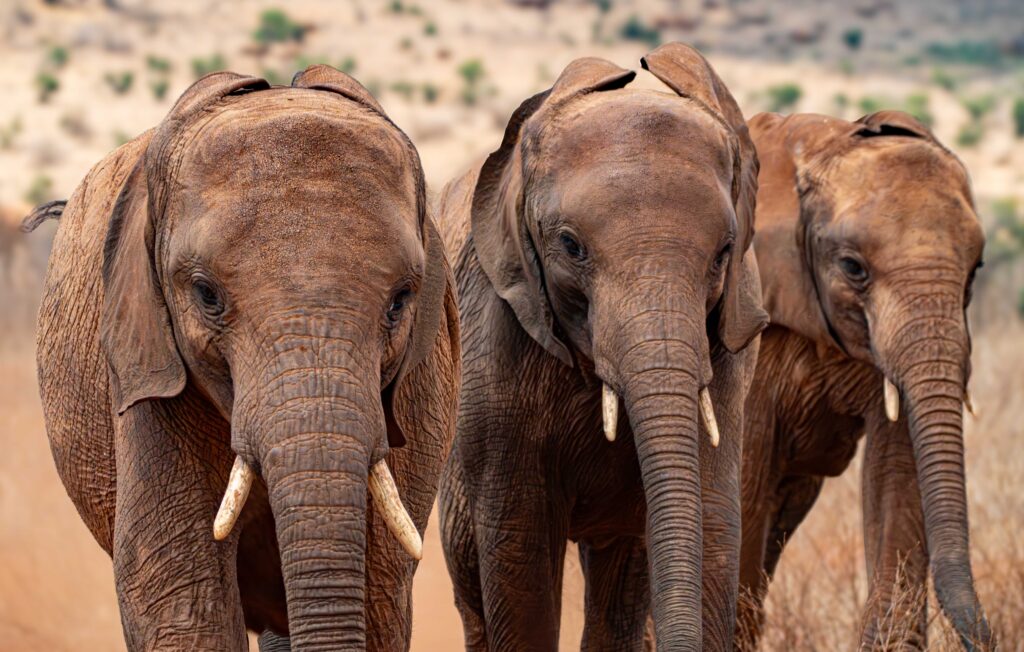
Young African savanna elephants, Kenya / Photo credit: Patricia Sims
____________________________________________________________________________________________________________________________________________
Written by Ashley Bowes for World Elephant Day. Ashley is a multimedia storyteller at Baleen Productions dedicated to inspiring communities to connect with nature and care for the planet.
Sources
- ElephantVoices: An Elephant’s Social Network, Elephant Tactile Communication, The Elephant Brain and Elephant Personalities
- Discover Magazine: Elephants May Hear Ground Vibrations Through Their Bones, Helping Them to Communicate Over 6 Miles
- Sheldrick Wildlife Trust: From Orphans to Guardians and Farewell Tolstoy
- IOL News: Elephants say goodbye to the whisperer
- Wildlife Trust of India: Right of Passage: National Elephant Corridors Project
- Lanka Newspapers: Sri Lanka Sounds Alarm as 128 Wild Elephants Killed in First Four and a Half Months of 2026
- WWF: Human Elephant Conflict: Mount Cameroon National Park launches the SAFE System Approach
- Beijing Normal University (Dr. Li Zhang): From Drones to Mobile Alerts: How Technology Is Helping People and Asian Elephants Coexist in Yunnan, China
- Interview with Patricia Sims, Founder and Executive Director, World Elephant Day